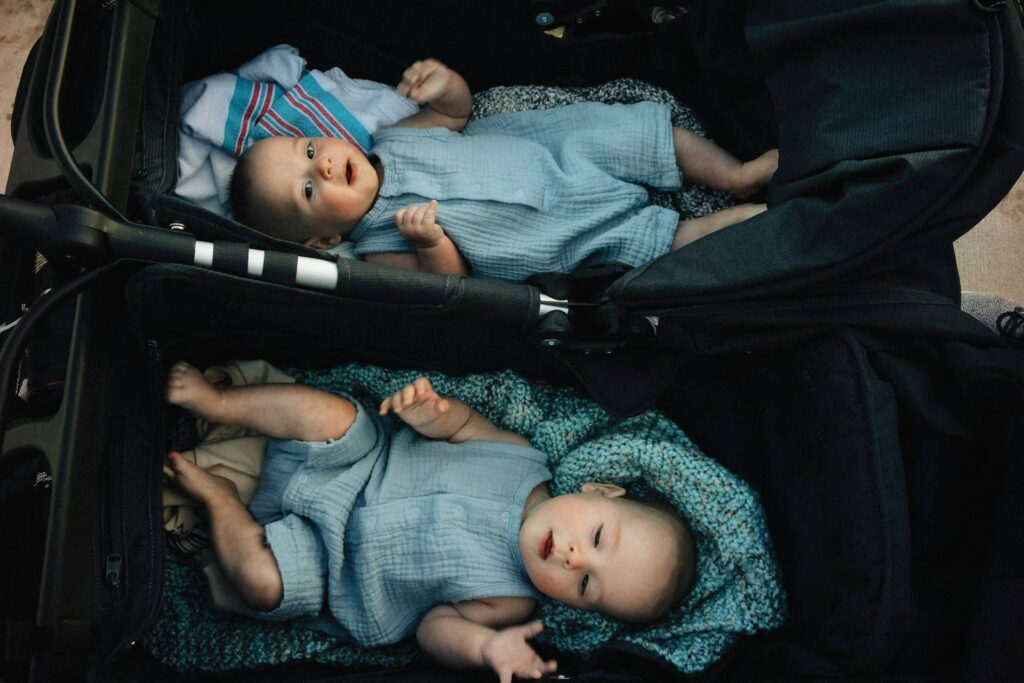
Naming one baby can feel like a big decision, but naming two at the same time? That’s a whole different challenge.
Twin names often need to do two things at once: feel connected, while still giving each child their own identity. Some parents love perfectly matched names, while others prefer subtle links or completely different styles. There’s no single “right” way, only what feels right for your family.
Naming my twins took months of sifting through long, boring lists of names. Hardly any of these lists related to twins or their special bond. With my pregnancy brain, I had to try think of all the possible combinations or clashes.
I want to make the process easier for you, so let’s explore popular twin name ideas, different naming approaches, and a simple way to find combinations that actually work well together.
Different ways to choose twin names
Every parent approaches naming differently. Here are some of the most common and effective methods:
1. Same starting letter
Names like Lily & Leo or Mia & Max create an obvious connection.
Pros: cohesive and memorable
Cons: can feel too “matched” for some families
This is what we personally did for our twins. They’re 5 years old now and no regrets.
2. Similar sound or rhythm
These names can include those with similar sounds (at the beginning or the end) of the names. Pronunciation may also play a role.
Names with a similar flow (like Ella & Noah or Ava & Mila) feel balanced without being identical.
3. Shared meaning or theme
Some parents choose names connected by meaning:
Nature: Willow & River
Light: Luna & Aurora
Strength: Ethan & Valerie
This creates a deeper, more subtle link.
4. Same origin or style
Names from the same cultural background or naming style often pair naturally:
Vintage: Henry & Clara
Modern: Arlo & Nova
Irish: Fiadh & Oisín
5. Rhyming names
Pairs like Mila & Lila or Jayden & Aiden sound cute, but we urge caution with this method.
Names that are too similar can become confusing in everyday life (especially when the kids are only listening with one ear). If the rhymes are too strong or the names are too similar, it’s bound to lead to some communication issues.
6. Complementary (not matching)
Some of the best twin names don’t match at all, they just feel right together:
- Hazel & Felix
- Ivy & Theo
This approach focuses on balance rather than similarity.
Popular twin name pairings
Some names naturally pair well because of sound, style, or popularity trends. Here are a few combinations parents often gravitate toward:
👶 Girl + Girl
- Ava & Mia
- Ella & Olivia
- Lily & Lucy
- Isla & Ivy
- Hailey & Bailey
- Kayla & Layla
- Sophia & Chloe
- Olivia & Sofia
- Avery & Beverly
- Charlotte & Scarlett
👶 Boy + Boy
- Noah & Liam
- Leo & Luca
- Jackson & Braxton
- Jack & James
- Theo & Oliver
- Aiden & Jayden
- Finn & Ezra
- Wyatt & Rhett
- Mason & Hassan
- Evan & Ivan
👶 Boy + Girl
- Noah & Ava
- Leo & Mia
- Riley & Kylie
- Oliver & Isla
- Samuel & Rachel
- Asher & Esther
- Henry & Emily
- Jack & Lily
- Theo & Ella
- Damian & Vivian
These pairs work because they share a similar feel (length, rhythm or overall style) without being too similar.
What makes twin names “work”?
Great twin names usually strike a balance between connection and individuality.
Things to consider:
- Do they sound too similar when called out loud?
- Do they have a similar “weight” (length, syllables)?
- Do they fit the same style or feel?
- Will there be any issues with them at school?
- Will they grow well with each child as they get older?
A smarter way to find twin name pairs
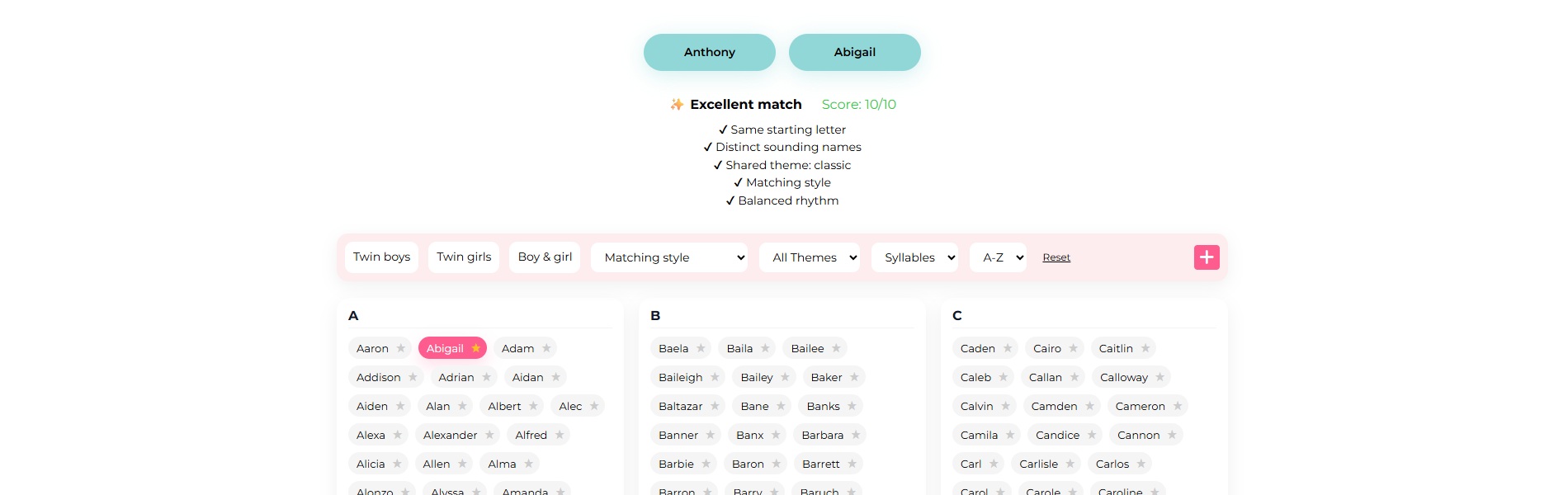
Instead of guessing or manually comparing names, I developed a free Twin Baby Name Pairing Tool to do the heavy lifting.
The free tool lets you:
- Browse names by gender and theme
- Filter by matching style (same letter, rhyming, origin, etc.)
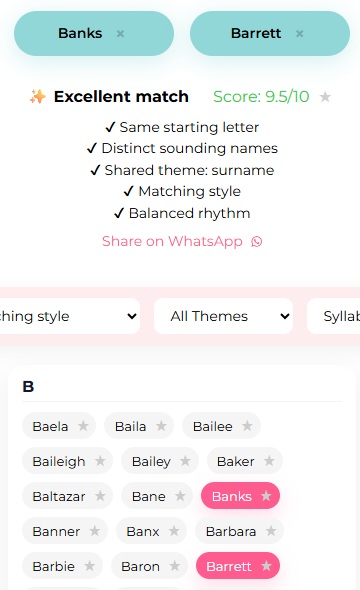
- See compatibility scores between name pairs
- Get instant suggestions after selecting your first name
It also highlights helpful insights like:
✔ Sound similarity (to avoid confusion)
✔ Shared meanings or themes
✔ Rhythm and syllable balance
Why use a tool?
This is the tool I wish I had when naming my twins. When you’re looking at dozens (or even hundreds) of names, it’s hard to spot patterns or evaluate combinations objectively. The Paring Tool helps by:
- Removing bias
- Surfacing combinations you might not have considered
- Giving quick feedback on what works (and what might not)
It’s not about telling you what to choose. It’s about helping you explore ideas faster and more confidently.
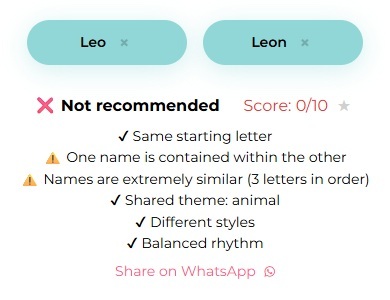
See this example below for “Leon” and “Leon”. It’s unlikely that someone would choose this pair, but this gives you an idea of how the Paring Tool works.
I’ve also consolidated a lot of fragmented name lists into one database with over 2350 names, so you have everything in one place.
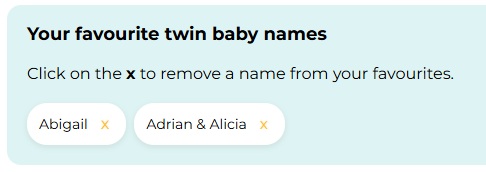
As a bonus, I also coded the option to add your own custom names or save your favourites:
Frequently asked questions about twin names
Choosing twin names starts with finding a shared style, theme, or rhythm. Many parents match names by length, first letter, origin, or meaning. The goal is to create names that feel connected without being too similar, so each child still has their own identity. Always test the names by saying them out loud (even if it feels weird) to see if they flow well into one another, or if you find yourself stumbling over your words. Think about possible nicknames, how the names sound with your last name, and how the names sound when you change their order.
Twin names don’t need to match exactly. Subtle connections (like similar styles, meanings, or syllable patterns) often work better than overly matching names. For example, names like “Luna & Leo” feel cohesive without sounding identical.
Popular twin names often follow patterns such as:
– Same first letter (e.g. Ava & Amelia)
– Similar sounds (e.g. Noah & Nora)
– Shared themes (e.g. Willow & River)
– Classic pairings (e.g. Emma & Olivia)
These combinations feel balanced and naturally go together.
Rhyming twin names (like Mia & Lia) can feel cute at first, but they may become confusing as children grow. Many experts recommend avoiding names that are too similar in sound to help each child develop their own identity.
Not necessarily, but it can help create a balanced feel. Many parents prefer names with similar rhythm (like “Ella & Noah”), though mixing syllable counts can work just as well if the names share a style or theme.
Boy and girl twin names might be the hardest to choose. For boy-girl twins, many parents focus on matching style rather than sound. For example, pairing two names with the same first letter (like “Mila & Mason”) or two classic names (like “Henry & Charlotte”) helps create a cohesive feel.
Common twin name themes include:
– Nature (e.g. Ivy & Willow)
– Celestial (e.g. Luna & Nova)
– Classic (e.g. James & Elizabeth)
– Modern (e.g. Kai & Zara)
Choosing a theme can make the naming process easier and more meaningful.
It’s a good idea to shortlist 3–5 name pairs rather than just individual names. This helps you compare how the names sound together and choose a combination that feels balanced.
Try to avoid:
– Names that rhyme or sound too similar
– Overly themed or gimmicky pairings
– Names with very different styles (e.g. ultra-modern + very traditional)
A balanced approach usually leads to names that age well.
Yes, twins can have completely different names. There’s no rule that they must match. However, many parents still prefer some level of connection (whether through style, meaning, or origin).
You can explore thousands of twin name combinations using our free Twin Baby Name Pairing Tool. It helps you filter by style, theme, and syllables so you can quickly find the perfect pair.
Final thoughts
Choosing twin names is a personal process. Whether you love perfectly matched names or completely different ones, the goal is the same: names that feel meaningful, balanced, and right for your family.
Take your time, say the names out loud, and trust your instincts.
And if you want a little extra help along the way, the Pairing Tool and our Community are here to guide you.
Have fun exploring, and enjoy the journey of finding the perfect pair. ✨