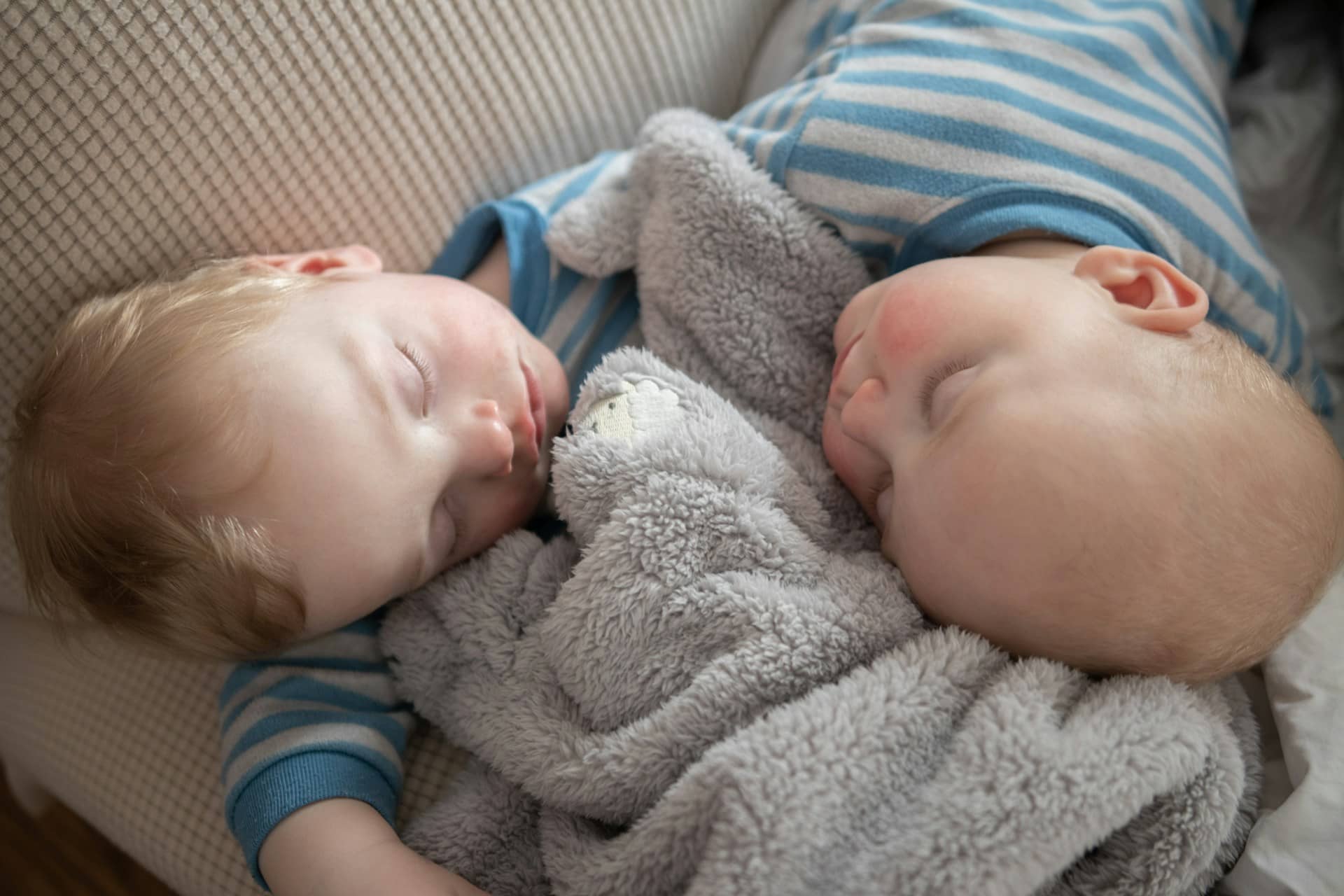
Before your twins arrive, everyone has something to say. They’ll warn you about the sleep deprivation. They’ll tell you to buy two of everything. Or not to. They’ll say things like “double trouble!” with a laugh that suggests they have absolutely no idea what they’re talking about.
But nobody really prepares you for the bond that twins have.
That’s because the twin bond isn’t something you can actually explain unless you’ve seen it. It’s something you witness quietly, in the ordinary moments. And once you do, it changes the way you see everything.
It starts before they even know what’s happening
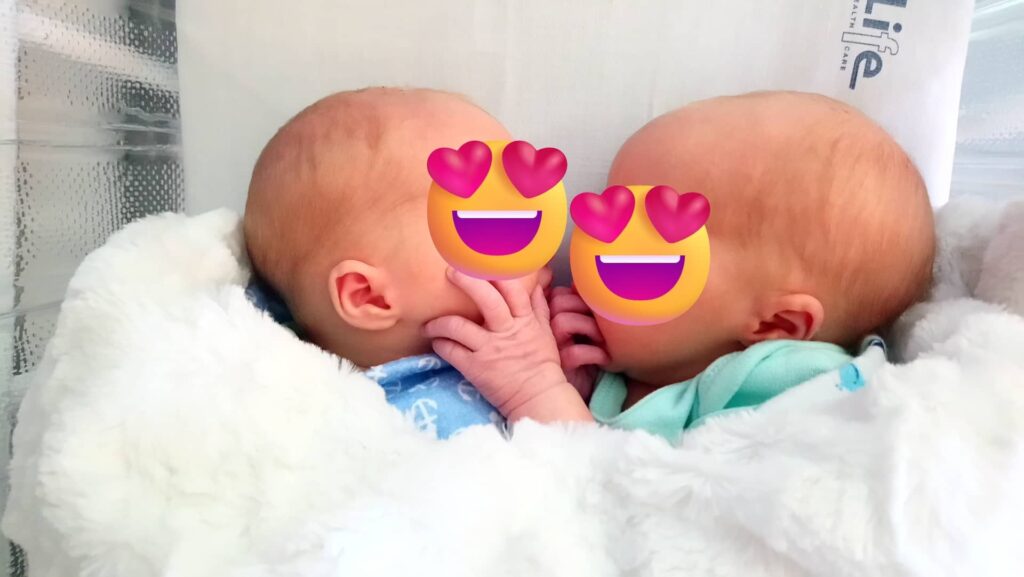
This is a photo of my twins when they were two days old. We were still in the hospital, and there they were just doing their twin thing. It was a special moment that I’ll remember forever.
There comes a time, usually somewhere in the fourth trimester, when your twins first really notice each other.
It’s not the same as the newborn gaze. It’s a real look. A recognition that’s like “Oh. You. I know you.”
And it stops you in your tracks.
Because of course they know each other. They’ve known each other longer than they’ve known you. They spent months in the closest proximity two humans can be. From heartbeats to warmth and kicks, they’ve shared it all.
You may be new to them. But they already understand each other.
That moment is the first time most twin parents truly feel it: this twin relationship is something extraordinary, and you are only just beginning to comprehend what you’ve brought into the world.
The language before language
Long before twins can talk, they communicate.
Twins develop their own systems of gesture, sound, and expression that exist entirely between them.
It isn’t the mysterious “secret twin language” of folklore, but it is something real: two people learning to read each other before they’ve learned to read anything else.
It happens as they get older too. Once my twins started talking, there have been many times where I’ve not understood what one twin has said (you know that jumbled toddler talk), but then the other will explain exactly what she meant. Somehow the other twin understood it better than me.
As a parent you sometimes feel like an outsider to a conversation you can’t quite hear. That’s not a bad feeling. It’s a humbling one.
The comfort they give each other that you can’t
This is the part nobody warns you about, and the part that catches most twin parents completely off guard.
There will be a moment (probably more than one) when one child is upset, frightened, or overwhelmed, and before you can reach them, their twin already has.
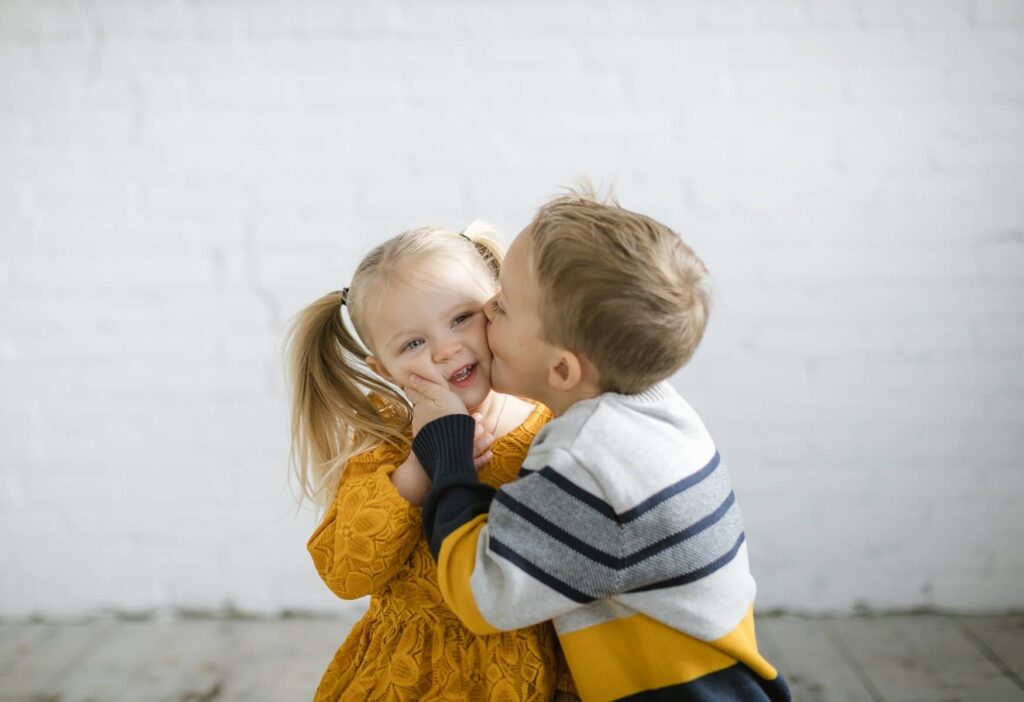
A hand placed quietly on a back. A head leaned against a shoulder. A hug or a kiss, or just a simple proximity that says: I’m here, and I understand, because I always do.
For a brief moment, you will feel redundant. Then you will feel something much bigger: a profound relief that your children will never be without someone who truly gets them. Someone who was there from the very first moment. A built-in best friend, in the most literal sense possible.
It’s one of the most special things you will ever witness as a parent.
The individuality that grows alongside the twin bond
Here’s what’s truly remarkable: the twin bond doesn’t diminish as they grow into themselves and become individuals. It actually deepens.
The twin bond isn’t formed because they’re the same, even if they’re identical twins. The bond is formed by being known, completely, unselfconsciously, from the very beginning.
Your twins will grow into different people. They’ll have different friends, different passions, different ways of moving through the world. One might be loud where the other is quiet. One might make decisions easily, while the other doesn’t. One might like heights, but the other might prefer safer activities.
And as that individuality emerges, the bond doesn’t fracture. It becomes richer.
That transition from inseparable infants to distinct individuals, who are deeply connected, is one of the most beautiful things about raising twins. It takes years. It happens gradually. But one day you’ll catch them together, laughing at something only they find funny, and you’ll think: there it is.
What to do with all that magic
If you’re wondering if there is anything you need to do, the honest answer is: no. You don’t need to engineer the twin bond, it engineers itself. Don’t try to force it.
What you can do is honour it. Make space for it. Let them have their private jokes and their quiet moments, and even their arguments (which often resolve themselves before you’ve even had a chance to intervene). Resist the urge to always separate, compare, or ask who did what first.
As we know, kids learn by example. But twins are fairly rare so that can be difficult to do.
Books are also a good way to learn, and my twins love books, but none of their books feature twins (and we have loads).
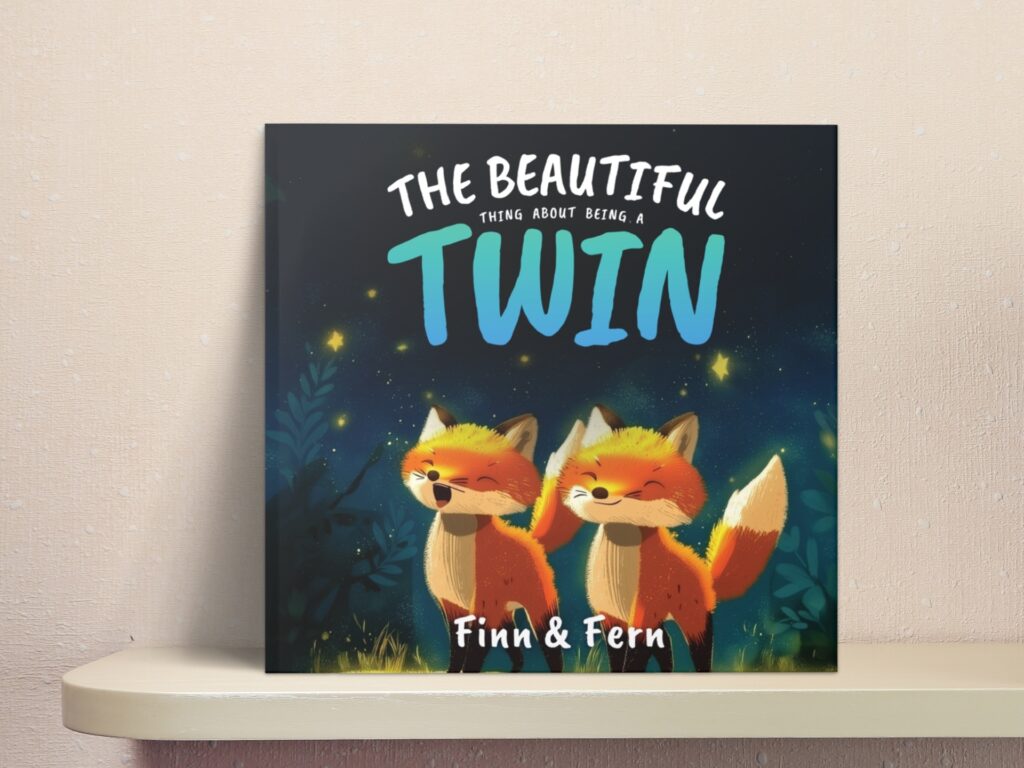
So I wrote a story about twin fox cubs that go on a fun adventure. It explores identity, togetherness, and the magic of having a built-in best friend. My kids loved it so much that I turned it into a personalised book called The Beautiful Thing About Being a Twin. Check it out if you’re looking for a story that captures the twin bond for little ones aged 2–7 (no pressure). Your children’s names are used throughout the book, and you can add a special dedication on the first page, to create a keepsake they’ll treasure forever.
A final thought
If you are raising twins, you already know that some days are chaos, some days are just hard, and some days someone cries and you’re not entirely sure who started it.
But you also know about the other moments. The ones that make you stop. The ones that remind you why two was always going to be the most extraordinary number.
Hold onto those. Write them down if you have to. Because the twin bond (that quiet, unshakeable thing) is one of the great privileges of your parenting life.
Nobody tells you that at the beginning. But now you know.